
Moving in Kew
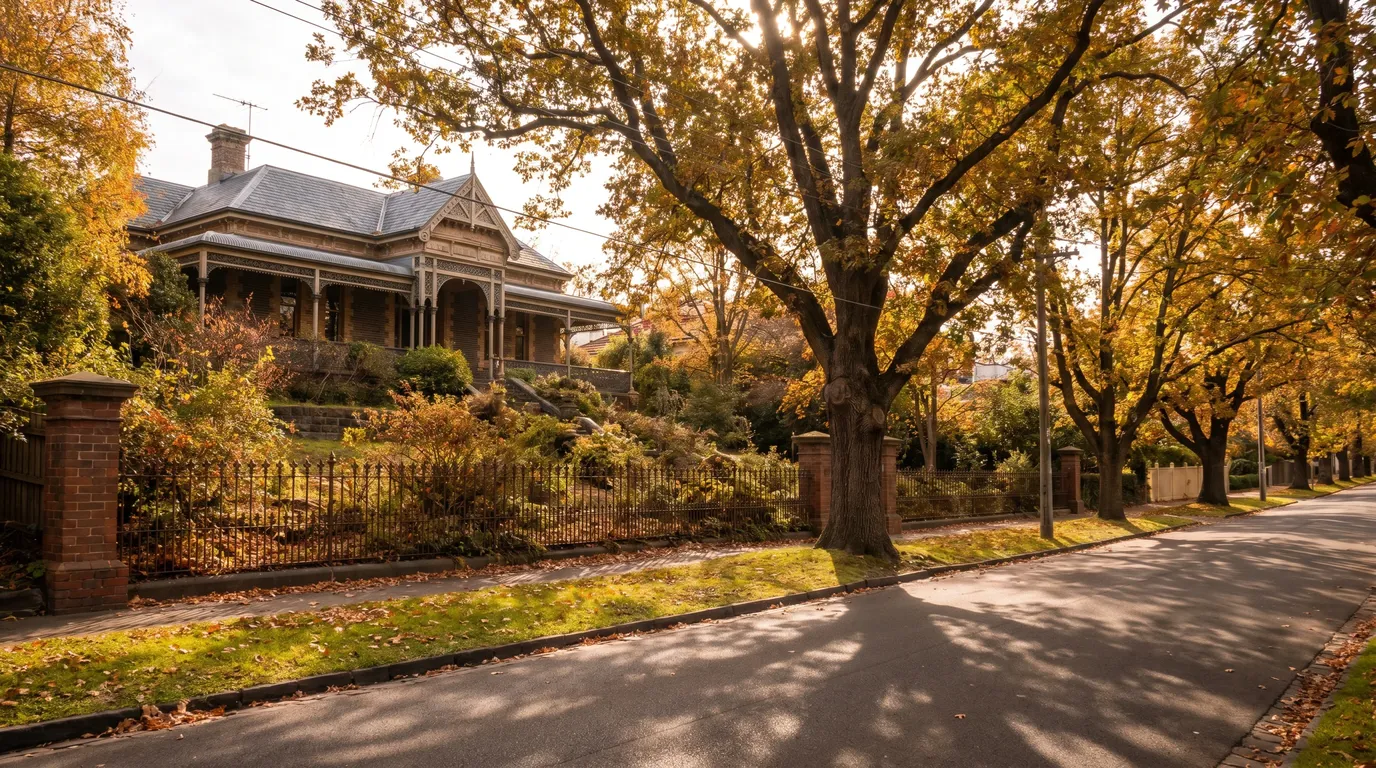
Kew sits on a rise above the Yarra bend, and the approach roads from the city rise too — Cotham Rd climbing from the river flat, Studley Park Rd curling along the water. The homes on those streets and the ones running off the Kew Junction business strip are a mix of Federation cottages and large Edwardian mansions on deep garden blocks, with some interwar brick homes and 1960s flats filling in the remaining gaps. The size of the blocks is one of Kew's defining features: properties on the best streets run fifty metres or more back from the road, with a long carry through established gardens to reach the front door. On the elevated streets above the river, some blocks slope back from the kerb, and the approach through a brick or iron estate gate means the truck stops at the gate, not the front steps. Tram route 48 runs along Cotham Rd toward Kew Junction, with clearway restrictions on the tram route corridor. The leafy canopy over many Kew streets also creates overhead clearance considerations for a pantech travelling slowly through the older residential blocks.
Local access & logistics
Every Kew move starts with the access, because that is what decides the truck, the crew and the timing. Here is what we plan around in Kew:
- Tram route 48 runs along Cotham Rd and into Kew Junction, with clearway hours when no vehicle may stop on the tram route.
- Deep garden blocks on the prestige streets mean a long carry from gate to front door; some slope up from the road.
- Established plane trees and ornamental elms on the older residential streets create canopy overhang that matters for pantech access.
- Iron or brick estate gates on Kew's larger properties mean the truck often stops at the street boundary — factor in the carry distance when quoting.
Send us the pickup and drop-off addresses with your quote and we'll tell you exactly how we'd handle your move, including parking, the carry and any lift or staircase that needs a plan.
Our Kew removal services
House Removals
Full home moves in the inner east, planned around your tram route and permit zone.
Apartment Removals
Unit and apartment moves — lifts booked, clearways checked.
Office Removals
After-hours commercial moves around the Camberwell and Kew business strips.
Furniture & Single Items
One large piece into a period home, done without scuffing the heritage skirting.
Packing & Unpacking
Pro packing with the right cartons, and unpacking at the other end.
Interstate Removals
Moving on from the inner east: Sydney, Brisbane, Canberra and beyond.
Storage Solutions
Short or long-term storage when settlement dates do not line up.
Parking in Boroondara
Boroondara Council does not issue a dedicated removalist parking permit — the Tradesperson Permit explicitly excludes heavy vehicles such as pantechs. For an address near a tram clearway corridor, the practical options are: plan a 7am or 7:30am start to load before the morning clearway begins, park on the nearest cross-street that is not on the tram route, or call Boroondara Council directly on (03) 9278 4444 to discuss your specific address and date. Note that Boroondara tram clearway zones have been tow-away zones (not just fine zones) since December 2020. For residential streets away from tram routes, standard time-limited parking rules apply; a loading spot close to the front door is usually achievable on most residential blocks.
Kew removals: common questions
Which tram routes affect Kew?
Route 48 runs along Cotham Rd toward Kew Junction. Clearway hours on Cotham Rd affect loading on or adjacent to that route. Most residential streets off the main road are not on a tram route and are more truck-accessible.
How long does a Kew move take?
Kew's large blocks mean a longer carry than a compact suburban move. A home with 30–40 metres of garden frontage from the gate to the front door adds carry time, regardless of the house size. We quote around the access as well as the volume.
Are there heritage restrictions on Kew properties?
Many Kew properties, particularly the Victorian and Edwardian homes, are under Heritage Overlay. This typically means driveway openings have not been widened to modern standards. The original opening may be tight for a large pantech; a smaller truck can be a better choice on a deep period block.