
Trams, Clearways and the Boroondara Parking Permit: a guide for removals in the Melbourne inner east
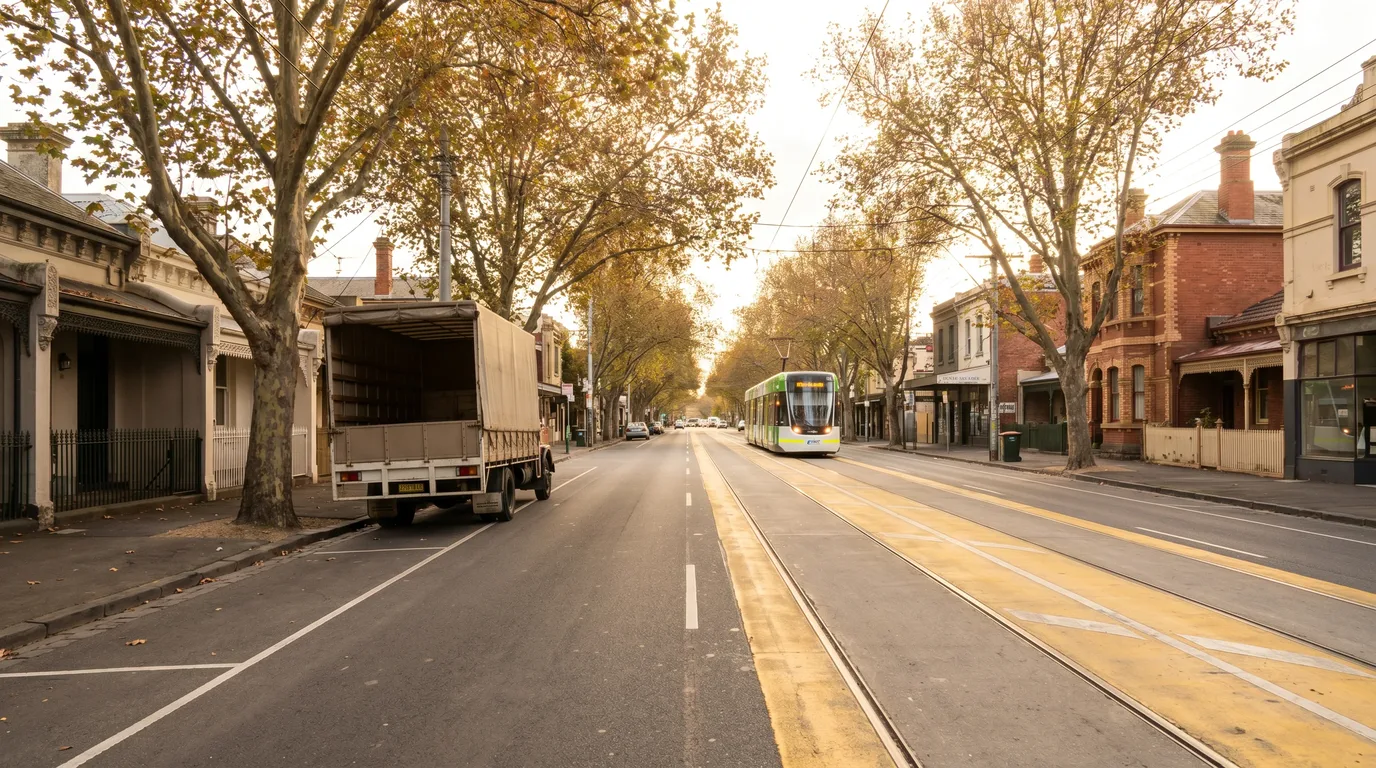
If you are planning a move in the Melbourne inner east — Hawthorn, Kew, Camberwell, Balwyn, Canterbury or any of the Boroondara suburbs — there is a good chance your address sits within walking distance of a tram route. The inner east carries some of Melbourne’s busiest tram corridors: Burke Rd through Camberwell, Glenferrie Rd through Hawthorn, Whitehorse Rd past Balwyn and Deepdene, Cotham Rd through Kew. For most residents these trams are a daily convenience. On moving day, they are the thing you plan around.
What a tram clearway means for your removals truck
A tram clearway is a designation on specific sections of a tram-route road that prohibits all stopping during certain hours — typically 7am to 9am and 4pm to 7pm on weekdays, though some routes have extended or slightly different windows. The clearway designation exists so that a stopped vehicle (a delivery truck, a double-parked car, a removals pantech) cannot obstruct the tram service.
For a removals crew, this means: if your front door faces Burke Rd, Glenferrie Rd, or one of the other major tram corridors in the inner east, the truck cannot legally stop on that road during clearway hours. Loading a three-bedroom Edwardian home through a tram clearway in the afternoon peak is not a workable plan.
The Boroondara Council temporary parking permit
Boroondara Council issues temporary No-Standing permits that allow a removalist or delivery driver to hold a kerbside space for a specified window. The application is made through the Boroondara Council website; the permit costs a small fee and must be applied for at least 48 hours before the move date.
The permit covers on-street parking spaces — not the tram clearway zones themselves. For a tram-adjacent address, the practical strategy is to secure a permit for the nearest suitable side street (often just one or two blocks from the front door) and then carry from there. A pantech parked two streets away and a crew running a longer carry costs less than an unplanned clearway stop or a parking fine that interrupts the day.
Which routes should you check?
The major tram routes affecting removals in the inner east:
- Route 48: Burke Rd from the city through Glen Iris and Camberwell to Canterbury Rd — clearways in force on the Burke Rd corridor.
- Routes 72 and 75: Glenferrie Rd through Hawthorn — one of the busiest tram corridors in the inner east; clearways on Glenferrie Rd.
- Route 109: Whitehorse Rd, running past Deepdene and Balwyn North — clearways on the Whitehorse Rd corridor.
- Route 8 and others: Toorak Rd at the northern edge of Hawthorn East — clearways apply on the tram sections.
Check the current PTV tram network map for your specific address. Routes can change and clearway hours are subject to update; PTV’s published schedule is the authority.
The practical planning checklist
- Confirm the clearway hours for the tram route closest to your address via the PTV website.
- Apply for a Boroondara Council temporary No-Standing permit for a side-street space, at least 48 hours before the move date.
- Plan the loading window around the clearway — a morning start before the clearway comes in, or a mid-morning window between peaks, usually works best.
- Brief your removalist on the clearway situation and the permit location before the day.
The Tram Planner on this site generates a specific access brief for your suburb and home era, including which routes to check and what permit timing applies.
A note on period homes
The inner east’s housing stock adds one more layer to the planning. A Victorian terrace from the 1890s or an Edwardian bungalow from 1910 was built before cars, which means the driveway opening (if there is one) may be narrow, the front path to the door may be long and gated, and the hallways inside are almost certainly narrower than a 1970s or modern build. None of this is a problem for an experienced crew — it is just the context to plan around. The combination of a tram clearway and a narrow-hallway Edwardian home is what makes an inner-east move genuinely different from a move in Melbourne’s outer suburbs.
Plan the permit and the clearway window; plan the crew size around the carry; and the rest of the day will run on schedule.
Common questions
What is a tram clearway and why does it affect my move?
A tram clearway is a section of road reserved for trams during designated hours — typically morning and afternoon peaks. During clearway hours, no vehicle may stop on the road within the clearway zone, including a removals truck. If your address is on or immediately adjacent to a tram route corridor, your removalist needs to time the loading to avoid the clearway hours or secure a temporary permit to hold a loading bay on a side street.
What are my parking options for a removals truck near a Boroondara tram route?
Boroondara Council does not issue a dedicated removalist parking permit. The Tradesperson Permit available from the council explicitly excludes heavy vehicles such as pantechs. The practical options for a tram-adjacent address are: start before the clearway begins (typically 7am), park on the nearest cross-street that is not on the tram route, or call Boroondara Council directly on (03) 9278 4444 to discuss your specific address and date. Note that since December 2020, Boroondara tram clearway zones are tow-away zones, not just fine zones.
Which tram routes run through the Melbourne inner east?
Route 48 runs along Burke Rd from the city through Camberwell to Canterbury; route 72 runs along Glenferrie Rd through Hawthorn and on to Camberwell; route 75 also uses Glenferrie Rd through Hawthorn; route 109 runs along Whitehorse Rd past Balwyn North and Deepdene; and several other routes thread through Kew and Glen Iris. Check the PTV network map for your specific street.
What happens if the loading takes longer than the clearway window allows?
If the crew is still loading when the clearway comes into force, the truck must move. This usually means parking further from the door and carrying a greater distance, which extends the day. Pre-planning the clearway window (and applying for a side-street permit that covers the whole day) avoids this entirely.
Planning a move?
Get a free, no-obligation quote and we'll plan the access at both ends with you.
Get a quote